Several times each month I list “Missing Kickout Flashings” as a deficiency on homes I inspect. So, what is a kickout flashing and what does it do?
In the most simple terms, it’s a small piece of tin (or sometimes vinyl). It’s about 4 inches tall, 4 inches wide and 8 inches long with a bend (approximately 110 degrees) built into it. Its purpose is to keep water that is running down a roof from getting behind the siding of an adjoining wall.

The kickout flashing gets installed at the bottom edge of a roof, that has an adjoining wall. It “kicks” water out and away from the wall; usually into a rain gutter. A properly installed kickout flashing should be under step flashing and behind the siding and house wrap.
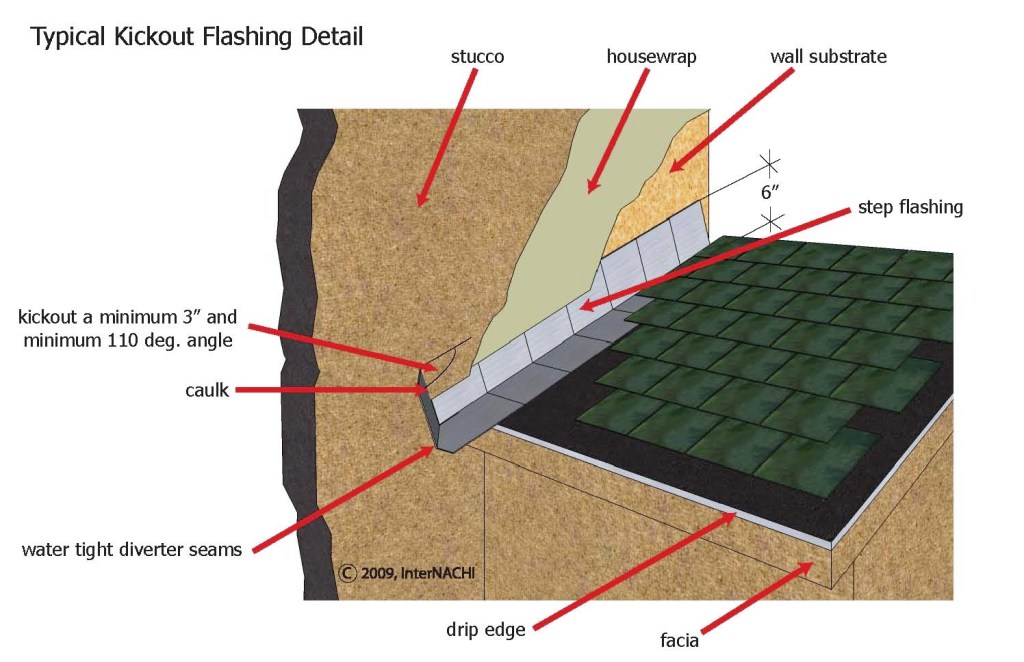
When a kickout flashing is missing, water can follow the step flashing along the wall and enter behind the siding. Once water is behind the siding, it can rot out the siding, framing lumber, and possibly lead to mold growth.
Below is a roof without a kickout flashing but lots of caulking. Below the gutter, you can see some work has been done to patch the water damaged siding. There is also water damage to the siding above the shingles due to insufficient spacing. The siding is wicking up water.

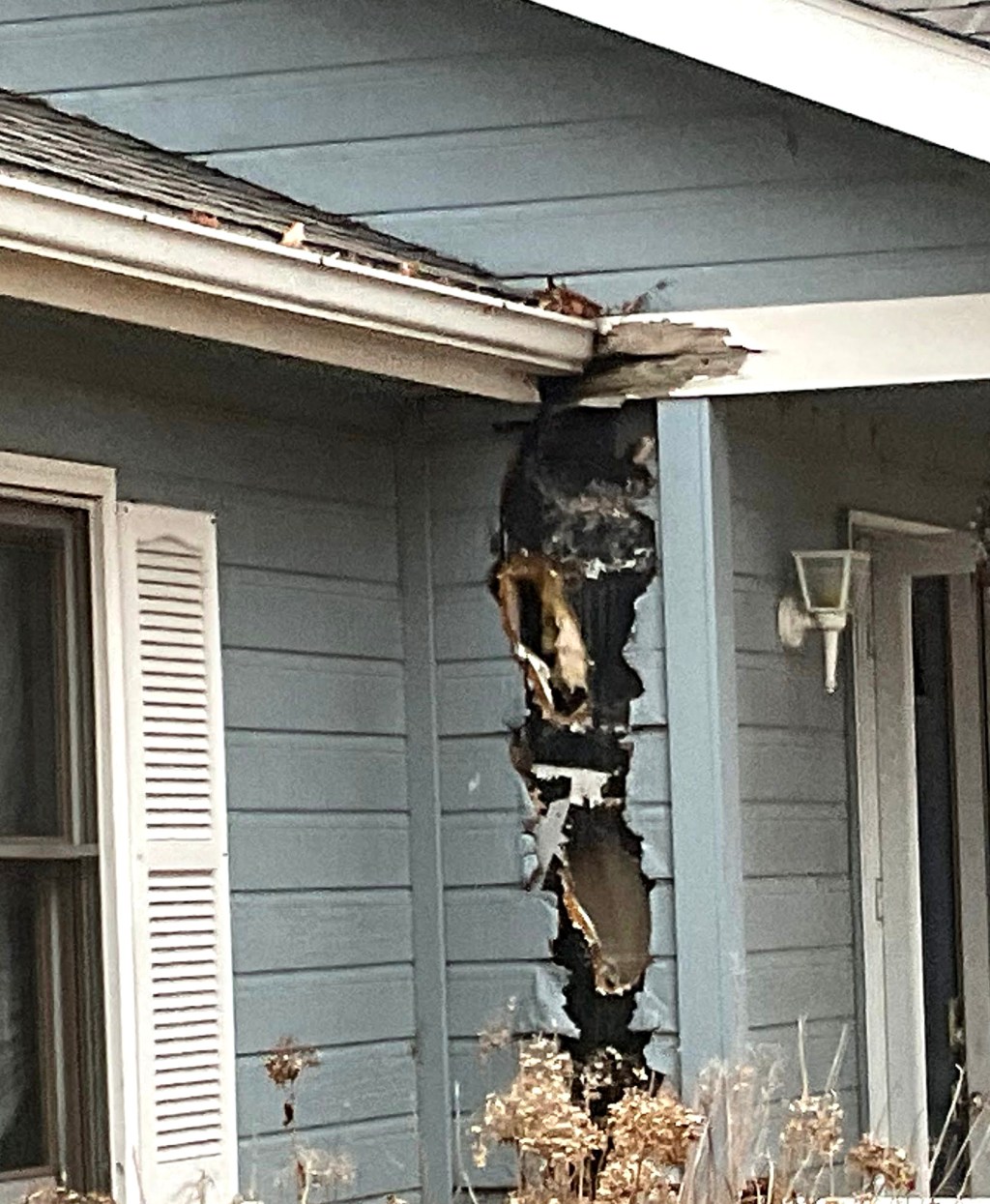
The next photo below is the worst case of damage I’ve seen from a missing kickout flashing. Luckily, this one was on a neighboring house and not the house my clients were buying!

If your house is missing one or more kickout flashings, a roofing company should be able to retrofit this flashing into place. There is far more nuance and skill to properly installing and sealing a kickout flashing that a quality roofing contractor can provide. You shouldn’t always go for the lowest bid; that may be why there’s a problem that needs to be fixed!
If you have any additional questions, please feel free to contact me or your roofing company to discuss specifics of your house.

 In View Inspection
Leave a comment