In this home, the homeowner was concerned about possible mold growth in the home and this crawlspace. In this case study, a picture is worth 1,000 words but I’ll try to keep it shorter so I don’t lose you! Hopefully my thoughts on this house can give you a few things to consider if you have a similar situation.
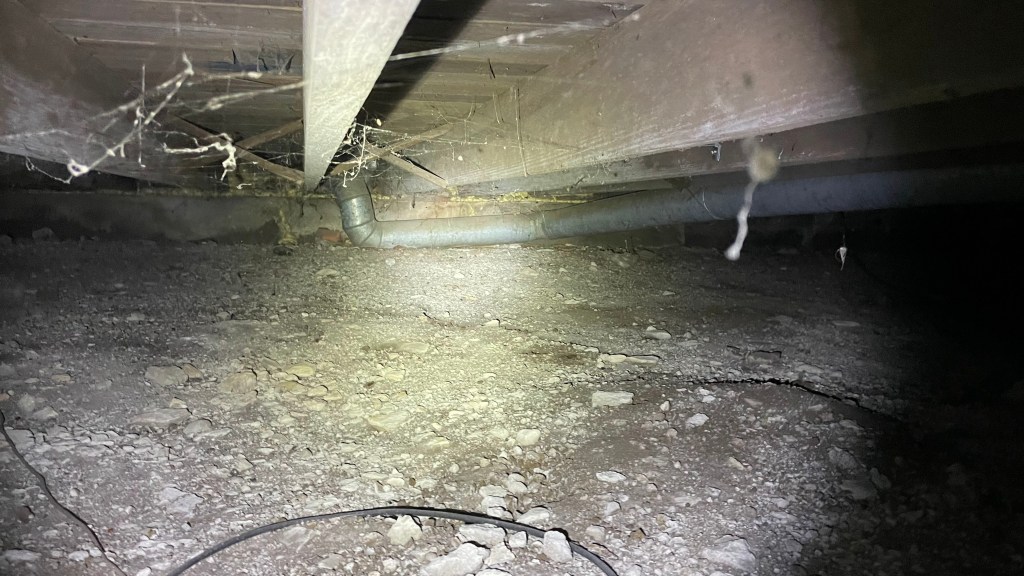
Outside, there is a hillside sloping down toward this side of the house so surface drainage is a potential source of moisture in this crawlspace.
Notice the possible efflorescence (white powder) visible on the rocks and soil surface in this crawlspace. Efflorescence is caused when small amounts of moisture in the soil (or concrete) leach calcium hydroxide out and allow it to combine with carbon dioxide in the air to form calcium carbonate. The small amount of efflorescence would indicate that moisture has been evaporating up out of the soil.
Rust is also visible at the bottom of the ductwork where it rests on the ground and out of view of this photo there were lines in the soil where condensation had dripped off the ductwork. This would happen in the summer when this crawlspace is more humid and the ductwork, cold from the air conditioning, condenses moisture on the outside of the pipes and drips off water; just like your ice tea glass!
There was also a white powdery substance is visible along the bottom portions of some joists. Mold surface samples were taken from the joists and air samples collected in the room above the crawlspace, master bedroom, and outdoors. Samples were submitted to the lab.
When we got the results back, the living room had high levels of Chaetomium and Aspergillus/Penicillium. Stachybotrys, commonly known as “Black Mold” did not register with any spores! That was good news!
Chaetomium is a water damage indicating mold that can be found on damp building materials such as drywall, paper, and wood. Some species can produce mycotoxins which may be the cause of the health problems.
Aspergillus/Penicillium get reported together due to the common morphology found amongst these spores. Aspergillus and Penicillium are common outdoor molds, but can also be found growing on water damaged building materials indoors. Some species may also grow in properties with chronic humidity issues; (like we found in this crawlspace). Some species may produce mycotoxins. Some species may be potential human pathogens.
Since mold growth requires moisture, I recommended the following options to help get things under control:
- Improving surface grading and drainage of the yard to divert water away from the foundation and the house. The easiest place to take care of water in your house is before it ever gets into your house!
- It’s also wise to make sure downspout extensions discharge water at least 8-10 feet away from the foundation. Your roof collects a lot of water and dumping it right at the foot of your foundation creates water intrusion and foundation settling issues.
- Improving the ventilation of the crawlspace could help disperse humidity. This could consist of cutting in vents, or bringing in fans, running a dehumidifier during wet seasons, or other options.
- Adding a plastic vapor barrier that’s sealed around the foundation walls could help reduce the amount of moisture being released into the crawlspace.
- Insulating the ductwork can help reduce condensation.
There are lots of different factors to consider on every house. The whole field of building science is dedicated to studying the interactions of weather, materials, heat and moisture transfer, and countless other factors.
Hopefully this case study gives you a basic understanding of these factors and helps you consider some options if you’re facing a similar problem.
If you’re having health problems be sure to consult with your doctor. Mold testing can help define what species of molds may be present in your home so you and your doctor can move forward with a treatment plan if needed.

 In View Inspection
Leave a comment