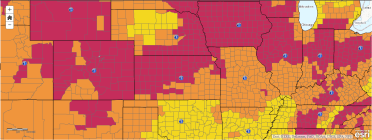
Radon is a radioactive gas released by the breakdown of naturally occurring Uranium in the soil. Levels can vary from home to home depending on the amount of Uranium in the soil, the soil composition, construction methods, and even the weather. We’ve measured high radon in slab homes, new homes, and homes next door to homes that had low radon. We’ve also found old stone basements with low radon. Testing is really the only way to know if your home is safe or not.
We’ve tested more than 2,500 homes and levels have ranged from 0.4 to 42.5 picocuries per Liter (pCi/L). The EPA recommends remediation at 4.0 pCi/L and above. According to the Kansas Radon Program, 25% of Kansas homes have high levels of Radon. Mitigation systems in our area usually consist of a 3″ PVC pipe installed in the concrete floor with a fan that pulls out radon and vents it outdoors. Mitigation costs generally range from $950 to $1,500. If levels come back above 4.0 pCi/L, sellers generally pay for mitigation system installation.
Even if you’re not personally worried about radon levels, it makes sense to test and, if radon levels are high, have a mitigation system installed before you purchase a home. That way you can live in a healthier home and avoid paying to install a mitigation system when you sell the home.
You can read more about radon from the EPA at:
https://www.epa.gov/…/…/files/2015-05/documents/hmbuygud.pdf


Leave a comment